

Himalayan pink salt lamps have skyrocketed in popularity over the last decade, transitioning from a niche wellness trend into a staple of modern interior design. With their warm, amber glow and natural, rustic appeal, it’s completely understandable why homeowners want to scatter them in every room of the house. One of the most common places people attempt to set up these beautiful light sources is the bathroom, aiming to craft a serene, spa-like sanctuary for evening baths and relaxation rituals.
However, putting your authentic salt crystal in a bathroom or any high-moisture area is one of the quickest ways to ruin it permanently. If you have ever walked into your bathroom only to discover a pool of brackish water pooling underneath your lamp, or noticed that your once-pristine crystal looks like it’s shrinking, cracking, and losing its distinctive texture, you are witnessing a phenomenon known as "salt lamp sweating" or "melting."
In this comprehensive guide, we will dive deep into the chemical science of why Himalayan salt lamps leak water in humid environments, the critical physical and electrical hazards associated with high-moisture placement, and actionable maintenance strategies to help your crystal last for a lifetime.
The Science of Salt: Understanding Hygroscopy
To fully grasp why a bathroom environment is inherently hostile to a salt lamp, we have to look closely at the elemental properties of natural Himalayan rock salt. Authentic pink salt blocks, harvested by hand from ancient sea beds deep within the Earth, are fundamentally hygroscopic compounds.
When your salt lamp is placed within a standard, well-ventilated living space, it actively pulls microscopic amounts of airborne ambient moisture toward its surface. Under normal conditions, this is an excellent, natural process. The heat generated by the traditional internal incandescent light bulb gently warms the surrounding rock salt crystal. This localized thermal energy promptly evaporates the collected moisture right back out into your room’s atmosphere, keeping the outer surface of your lamp perfectly dry and stable.
However, when you place that same crystal inside a high-humidity zone like a bathroom, this delicate natural equilibrium completely breaks down. The sheer density and volume of water vapor hanging in the air drastically outpaces the evaporation capabilities of a low-wattage bulb. The crystal absorbs far more moisture than it can shed. As a consequence, the accumulated water molecules begin to liquefy the outermost crystalline layers of the rock salt, causing water to bead up, run down the sides, and collect around the base.
Why the Bathroom is an Absolute "Red Zone"
Bathrooms are meticulously engineered to handle excessive moisture, boasting tiled surfaces, water-resistant paints, and heavy-duty ventilation networks. Your delicate Himalayan salt lamp, however, possesses zero natural defense mechanisms against prolonged dampness. Let’s look at the primary environmental variables that trigger accelerated deterioration inside your bathroom:
1. Concentrated Steam from Hot Baths and Showers
Every time you indulge in a hot, steaming shower or fill a bathtub, the room’s air fills with heavy, concentrated water vapor. This dense cloud of steam settles immediately onto every cool surface it encounters—including your rock salt lamp. Because the dry salt behaves like an open sponge, it voraciously absorbs the thick water droplets coating its exterior within minutes, launching a rapid melting cycle.
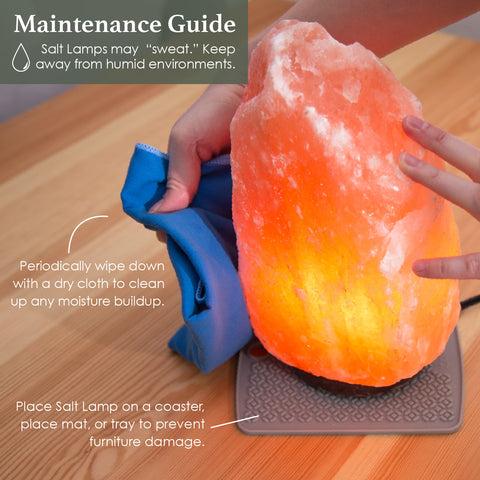
A sweating Himalayan salt lamp requires immediate wiping with a dry microfiber cloth to prevent structural decay.
2. Trapped Relative Humidity and Poor Air Flow
Even if your bathroom features a functional ceiling exhaust fan, ambient humidity levels typically remain elevated for hours after a shower concludes. This persistent, damp microclimate means your rock salt crystal never receives a window of dry air to properly recover, forcing it into a state of perpetual weeping.
3. Extreme, Rapid Temperature Shifts
Bathrooms rapidly fluctuate between cool, dry states and hot, humid spikes multiple times a day. These sharp, dramatic climate swings impose intense physical and structural stress directly on the crystal matrix of the salt. Over time, these shifts accelerate internal fracturing, causing small chunks of salt to flake away, crumble, or collapse outright.
The Hidden Dangers of a Leaking Salt Lamp
Witnessing your beautiful decorative item dissolve is disappointing, but a melting salt lamp presents far more significant issues than mere aesthetic damage. Leaving a severely sweating lamp unaddressed can expose your home to various unnecessary hazards:
Electrical Malfunctions and Serious Fire Risks
This is by far the most critical hazard to consider. All authentic Himalayan salt lamps rely heavily on an internal configuration consisting of an electrical power cord, an inline switch, a bulb socket, and a glowing incandescent bulb. When a crystal sweats intensely, a constant stream of highly saturated saltwater runs directly down the sides of the rock body.
Eventually, this conductive brine seeps down into the wooden or plastic base housing the electrical wiring components. Because salt water is a highly potent conductor of electricity, its presence inside a live socket can cause rapid short circuits, spark failures, blown fuses, or even spark a dangerous electrical fire right on your vanity countertop.
Irreversible Corrosion and Damage to Household Surfaces
As the pooling moisture flows down the sides of your lamp, it carries high concentrations of dissolved mineral salts along with it. If your lamp rests directly on a premium wooden bathroom vanity, a polished marble countertop, or a painted shelf without defensive layers underneath, this corrosive salt brine will quickly erode protective topcoats. This leaves unsightly, permanent white salt rings, warps natural wood grain, and can stain costly stone finishes permanently.
Accelerated Deformity and Shrinkage
If left unchecked in a humid, damp space for a few consecutive months, a high-quality, substantial crystal will literally shrink down to a fraction of its original mass. The crisp contours, deep ridges, and rough natural textures will slowly melt away into a smooth, pockmarked, deformed piece of rock that looks entirely unappealing.
Other High-Moisture Household Areas to Avoid
While the bathroom stands out as the ultimate hazard zone for rock crystals, it is certainly not the only spot in your home capable of causing moisture issues. For premium preservation, keep your lamps away from these locations as well:
- The Kitchen Zone: Large amounts of vapor escape constantly from boiling pots, hot dishwashers, and stovetops. Avoid placing lamps close to cooking spaces or kitchen sinks.
- Direct Proximity to Humidifiers: If you operate a cool-mist humidifier in a bedroom to ease dry air, make sure your salt lamp sits far away on the opposite side of the room to shield it from direct water output.
- Open Windows and Outdoor Patios: Leaving an organic salt lamp sitting directly on a windowsill next to an open screen during a heavy rainstorm or humid summer evening exposes it to outdoor moisture elements that can cause rapid sweating.
- Unfinished Basements: Below-grade, unfinished basements often retain high natural levels of earthbound moisture and lack stable airflow, forming a risky environment for unprotected salt.
Step-by-Step Guide: How to Save a Sweating Salt Lamp
If you have inadvertently left your favorite lamp inside a high-moisture zone and discovered it crying, don't worry! You can easily save the structural integrity of your crystal by executing these quick maintenance steps immediately:
- Relocate the Lamp Instantly: Move the lamp entirely out of the damp space and transition it into a well-ventilated, climate-controlled dry room, such as a bedroom or living area.
- Safely Disconnect Power and Wipe Clean: Unplug the main power cord from the wall outlet. Carefully pull the internal electrical base and bulb assembly completely out from the core of the salt. Take a soft, dry microfiber cloth and gently pat down the damp outer crystal face to dry it off. Never scrub aggressively, as moist rock salt turns soft and can gouge easily.
- Keep Your Lamp Turned On: The best protection strategy is to leave your lamp powered on consistently for extended periods. Quality low-wattage incandescent bulbs use very little power, and their gentle, steady heat output ensures that any everyday ambient humidity evaporates before it can pool.
- Ditch the LEDs: Never install an LED bulb inside your Himalayan rock salt product. LED light sources remain cool to the touch and produce no thermal warmth. You must utilize a traditional incandescent bulb (typically 15W to 25W depending on size) to generate the heat needed to dry the salt.
- Incorporate a Safeguard Coaster: Always rest your crystal's wood or marble base on top of a wide silicone mat, a thick ceramic tile, or a heavy protective coaster. If unusual weather patterns or extreme humidity spikes trigger minor sweating, your underlying wood or stone furniture remains fully shielded from salt stains.
Where Should You Display Your Salt Lamp Instead?
To safely maximize the lifecycle, aesthetic beauty, and soothing atmosphere of your home decor, you should strategically place your crystals within dry, high-traffic spaces where you spend most of your time. If you want to expand your collection with authentic, hand-carved pieces, explore the premium options available in our Himalayan Salt Lamps Collection. Here are three highly recommended locations for your lamps:
- The Bedroom Nightstand: A perfect, safe alternative to a damp bathroom. The soft amber glow delivers an ideal, low-blue-light environment that helps your mind wind down naturally before sleeping.
- Your Dedicated Home Office Desk: Placing a clean Natural Himalayan Salt Lamp right beside your desktop setup adds an elegant, earthy element to a digital environment while keeping the crystal completely safe in a climate-controlled room.
- Living Room End Tables: Positioning your lamps prominently inside your main family room ensures they remain positioned in a well-ventilated, highly stable ecosystem where they can be appreciated daily without risk of damage.
For more home styling inspiration, expert crystal care guides, and deep dives into raw earth minerals, be sure to bookmark our comprehensive, updated Himalayan Salt Blog.
Product Disclaimer:
The lamp is not intended to diagnose, treat, cure, or prevent any disease. Consult your healthcare provider before starting any dietary supplements or wellness programs.
Due to the inherent nature of Himalayan Rock Salt, no two lamps are alike. Moreover, variations in size and weight are expected, making each lamp uniquely appealing.