

The Journal • Care Guide
If I Wipe My Salt Lamp With a Damp Cloth, Will It Melt?
Genuine Himalayan pink salt lamps do far more than just look beautiful on a nightstand. They create an inviting, ambient amber glow while quietly working to improve indoor air quality. However, because each lamp is hand-carved from 100% natural rock salt, keeping them clean can feel a bit intimidating if you aren’t sure how the mineral reacts to water.
A question we hear all the time at Q&A Himalayan Salt is: “Will wiping my lamp with a damp cloth cause it to melt?”
The short answer is no—a lightly damp cloth will not ruin or melt your lamp. In fact, a gentle wipe-down is exactly what experts recommend to clear away the trapped dust, pet dander, and airborne particles that naturally gather on the crystal’s surface.
The real trick lies in your technique. While a faint bit of moisture safely lifts away dirt, a dripping wet rag or running tap water will quickly cause the outer salt layers to dissolve, leading to unwanted pooling and sweating.
In This Guide:
1. The Science: Why Salt Lamps “Sweat”
To understand your lamp, you have to look at how it interacts with your room’s air. Pure rock salt is naturally hygroscopic, meaning it acts like a magnet for moisture vapor.
As the lamp sits in your home, it gently pulls in tiny water droplets from the surrounding air. Along with that humidity, it pulls in dust, smoke, and allergens, trapping them securely on the rugged exterior.
High humidity can cause an unlit salt crystal to collect surface water.
When you turn your lamp on, the heat from the bulb warms up the salt block. This warmth evaporates the absorbed water back into the room as clean vapor, leaving the dirt trapped safely on the crust. It’s a beautiful cycle that naturally cleans your air.
However, if your room gets too humid or if the lamp stays turned off for days, the salt keeps pulling in moisture without ever drying out. Once it gets oversaturated, the crystal layers begin to liquefy slightly. This creates a salty puddle at the base—often called “sweating” or “melting.”
2. The Safe Way to Use a Damp Cloth
Because the lamp works by trapping airborne dust, it will eventually lose its signature bright pink gleam and take on a dull, matte appearance. Letting this dust layer build up doesn’t just look untidy—it also blocks the bulb’s warmth, reducing the lamp’s natural air-cleaning power.
Regular feather dusters can’t cut through the static hold on the rock, and chemical sprays are out of the question. A tightly wrung-out damp cloth is the best solution.
By using a cloth that is barely moist to the touch, you only dissolve a microscopic layer of the surface salt. The cloth lifts the dirt away effortlessly without compromising the deep structural core of the rock. As long as you dry it right after, your lamp will never melt away.
3. Step-by-Step Maintenance Routine
To clear away dust without ever triggering an accidental melt, use this safe sequence designed by our care specialists at Q&A Himalayan Salt:
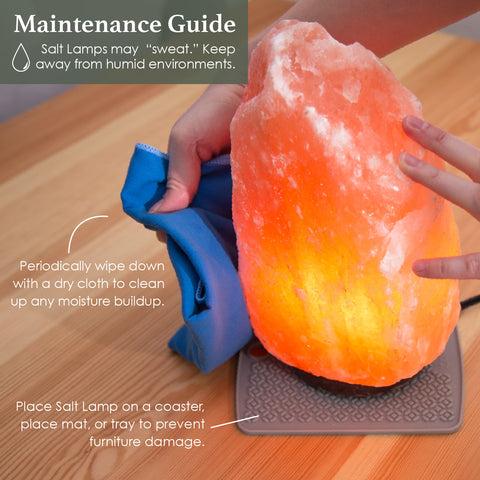
A quick dab with a micro-damp rag easily restores the deep pink glow.
- 1. Unplug Everything: Safety comes first. Always disconnect the cord from the wall outlet so the internal electrical components stay completely dry.
- 2. Wring It Dry: Wet a clean microfiber cloth with plain water, then wring it out with all your strength. It should feel slightly cool and damp, never dripping wet.
- 3. Gentle Blotted Strokes: Dab and slide the cloth smoothly over the ridges. Avoid harsh scrubbing so you don’t chip away small salt grains.
- 4. Dry Manually: Immediately take a fresh, bone-dry towel and blot up any remaining wet film left behind.
- 5. Heat Cure: Plug the lamp back in and turn it on right away. Leave it running for a few hours so the bulb’s warmth seals the crystal pores.
4. 5 Common Habits That Ruin a Salt Lamp
1. Tap Rinsing
Holding your lamp under a running faucet will cause rapid erosion, washing away chunks of mineral and permanently altering its shape.
2. Household Cleaners
Chemical sprays and soaps leave behind sticky chemical residues that choke the salt’s natural surface respiration cycle.
3. Skipping the Heat Dry
Leaving a damp lamp turned off causes moisture to collect at the bottom, which can seep directly into the cord mechanics.
4. Rough Scrubbing Pads
Nylon bristles or metal wool pads scratch and flake the carefully hand-sculpted features of genuine premium rock salt.
5. Switching to LED Bulbs
While energy efficient, LED bulbs produce no physical warmth. Without thermal heat, the moisture loop stalls, keeping your lamp wet.
5. Pro Tips to Prevent Long-Term Melting
If your lamp is weeping even when you haven’t cleaned it recently, it is simply trying to digest the humidity in your home. You can keep it completely stable with a few smart placements:
- Leave It Running: The most effective trick is to keep your lamp illuminated. Leaving it on 24/7 is safe, cost-efficient, and creates a steady thermal barrier that fights off weeping entirely.
- Watch the Room Selection: Avoid putting your lamp in naturally damp spaces like bathrooms, kitchens next to hot stoves, or directly beside a running humidifier. Cozy bedrooms, home offices, and living rooms are the perfect fit.
- Protect Your Countertops: Avoid placing salt products directly on bare, raw wood or marble tables. Always ensure your lamp sits on a protective coaster or base to safeguard your furniture from accidental salt condensation.
- Storage Wrap: If you ever need to pack your lamp away for a trip, slide the dry salt chunk into a clean plastic bag and seal it tightly with a twist-tie to shield it from atmospheric air.
6. Sourcing Quality: Real vs. Counterfeit Salt
It is worth noting that cheap imitation lamps crumble and liquefy far quicker than premium ones. Many mass-market options are put together using low-density salt scraps or artificial salt moldings that disintegrate the second they touch a damp towel.
By sourcing through Q&A Himalayan Salt, you get genuine, dense crystals carved out of protected subterranean reserves. This high mineral density gives our lamps long-term strength, making regular upkeep simple and stress-free.
7. Frequently Asked Questions
What is the white crust forming at the base of my lamp?
That is just salt that recrystallized after a sweating event. Simply scrape off the loose powder with a dry rag or plastic card, wipe down the area, and keep the lamp turned on to dry it out completely.
Can I use a hairdryer to speed up the drying process?
Absolutely. If you accidentally got the lamp a little too wet during cleaning, running a hairdryer on low heat is an excellent way to dry the hidden grooves quickly before turning it back on.
How often do I need to clean my salt lamp?
For most homes, a quick wipe-down once every month or two is plenty. If you have indoor pets that shed hair, you can clean it every few weeks using our micro-damp routine.
What incandescent bulb wattage works best?
It depends on weight. Small accent pieces (2–5 lbs) run perfectly on a 15-watt bulb. Larger statement pieces up to 20 lbs require a warmer 25-watt bulb to drive evaporation properly.